ServicesDuctless Mini-Splits
Ductless Mini-Splits in Millwood, WA
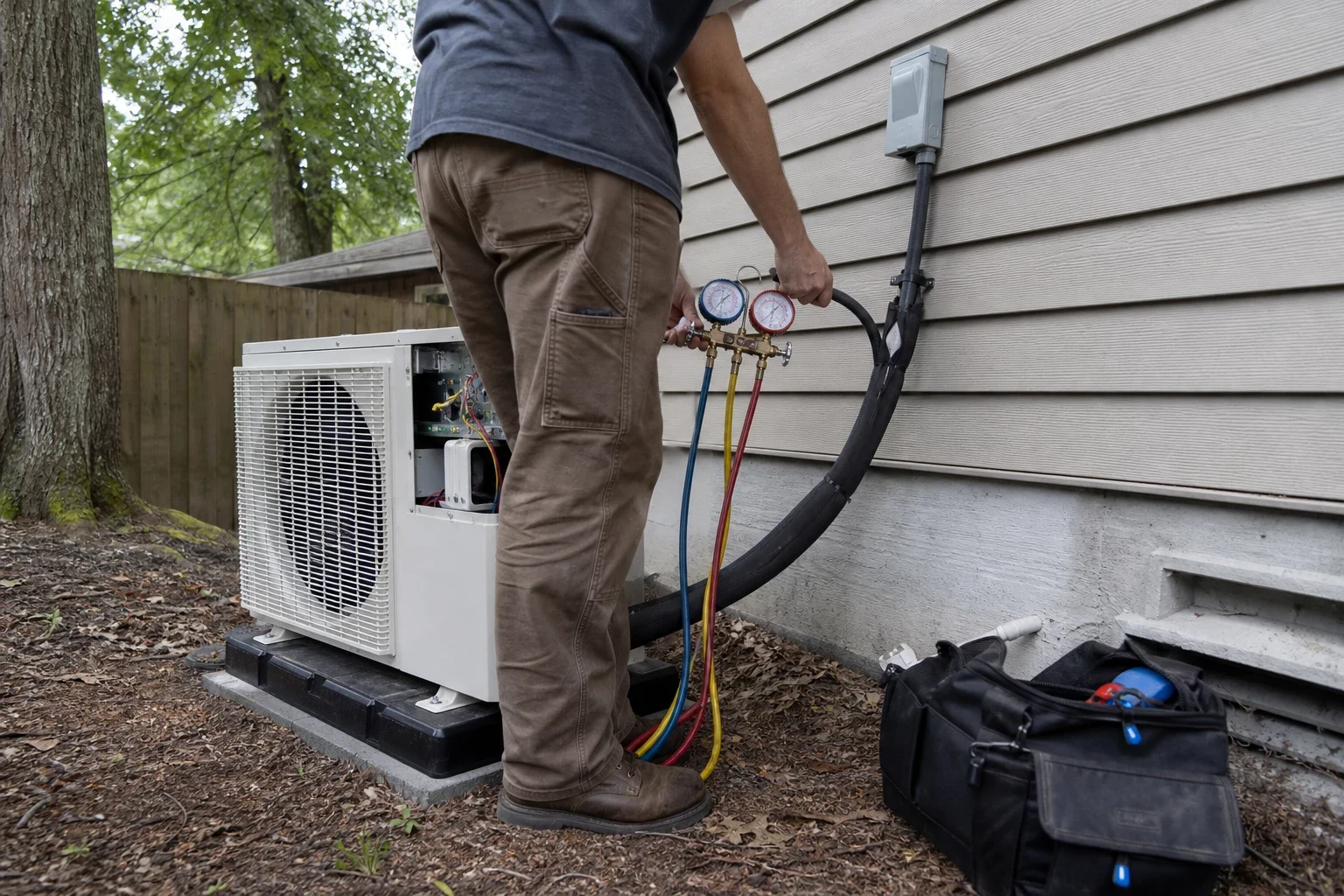
A ductless mini-split heats and cools a room through one small wall unit and a line about the width of a soda can. We size it to the room, place it where you want it, and keep your floors, walls and yard clean while we work.
When a mini-split makes sense
A mini-split pairs an outdoor heat pump with one or more indoor heads. Because it skips ductwork, it suits rooms the furnace never reached well: a bonus room over the garage, a finished basement, an addition or an older house heated by baseboards.
Cold-climate models built today still produce heat with outdoor temperatures in the teens and below, which is what a Millwood winter asks for, and they cool without much noise in summer. Each head has its own remote, so the bedroom and the living room can sit at different temperatures.
If a mini-split is the wrong choice for your house, we'll tell you. When central equipment or a whole-home heat pump would serve you better, you'll hear that and why before spending anything.
What your installation includes
- Room-by-room sizing
- We measure each room, look at windows, insulation and sun exposure, and size every head to its space. An oversized head short-cycles and leaves the room clammy; an undersized one runs nonstop.
- Head placement you approve
- Before we drill anything, we mark the spot on the wall and talk through airflow, furniture and how it will look. Nothing goes up until you agree.
- A small, sealed wall opening
- The line set passes through one hole roughly three inches across. We seal it inside and out, and run a paintable cover along the outside wall so the lines look tidy.
- Outdoor unit set above the snow
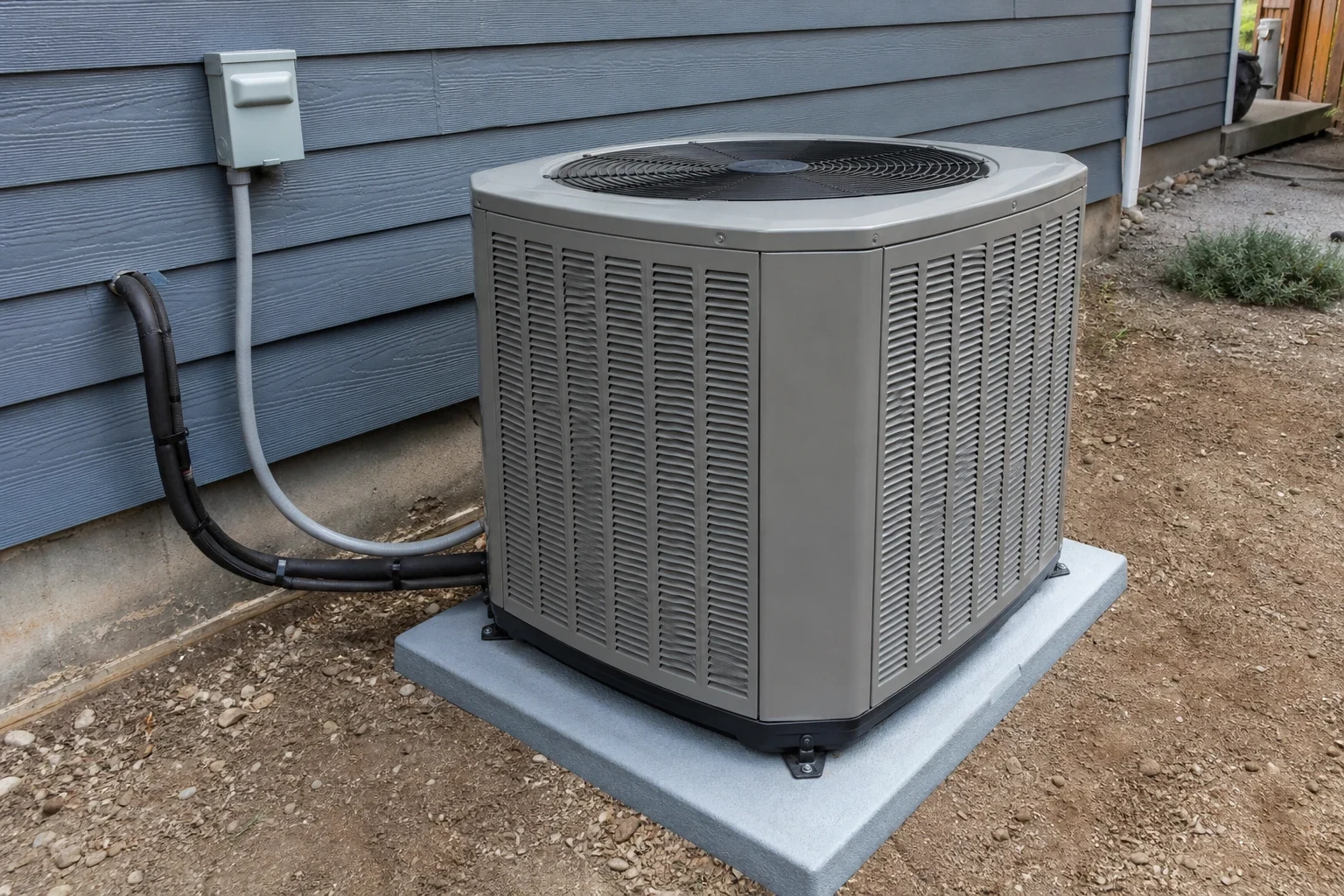
- The condenser goes on a pad or wall bracket high enough to stay clear of snow and drifting leaves, with the condensate routed away from walkways and foundation.
- Pressure test and deep vacuum
- We pressure-test the connections with nitrogen and pull a deep vacuum before releasing refrigerant. That step is what keeps a mini-split running for years instead of slowly leaking.
- Permit and walkthrough
- We pull the permit the job requires and show you how to use the remote, clean the filters and set schedules before we leave.
Signs your home could use a mini-split
A room that's always too hot or too cold
Whatever the thermostat is set to, the room over the garage bakes in July and turns icy by January.
Big bills from baseboard heaters
Baseboard heaters turn electricity straight into heat at full cost. A heat pump moves existing heat instead of making it, so you get the same warmth for far less power.
Hauling window units each summer
Tired of carrying window units up from storage every spring? A head on the wall runs quieter and frees up the window.
New space without ductwork
An addition or ADU can run on its own mini-split with separate controls, with no connection to the main house system.
Stuck inside during smoke season
When smoke in late summer forces the windows shut, a mini-split keeps the air cool and filtered without opening anything.
What sets the price of a mini-split
You get a written, itemized quote, so every cost is easy to see. The price mostly depends on how many rooms you want to cover and how long the line runs are. A mini-split is a type of heat pump, so it may qualify for Avista rebates and federal tax credits, and we help you file for them once it's installed.
How many zones
A single head serving one room runs far less than a multi-zone system feeding four rooms from one outdoor unit.
How far apart the units sit
The simplest jobs put the indoor head on an outside wall with the outdoor unit directly beneath it. Upstairs rooms, interior walls and long runs need more line set, more cover and more labor.
Cold-weather rating and efficiency
Units designed to keep heating when it's very cold outside cost more up front, but they keep the house warm without leaning on backup heat.
Your electrical panel
Each system needs a dedicated circuit. If your panel is old or full, extra work may be needed, and we put that on the estimate up front rather than later.
How the day goes
- 1
A free estimate by phone and in person
Estimates are free on installations and replacements. We visit, measure, answer questions and leave you a written quote before any work begins.
- 2
Protecting your home first
On install day we lay drop cloths and runners from the door to each work area and put a dust catch under the drill point. Outside, we set mats on lawns and beds so the line route does not leave ruts.
- 3
Mounting and connecting
We hang the indoor head, set the outdoor unit, run the line set and condensate, and make the electrical connection. Most single-zone jobs finish in a day; multi-zone systems may take two.
- 4
Testing and cleanup
We vacuum and charge the system, check temperatures at each head, vacuum up every bit of drywall dust and haul away packaging. You get a plain update on what we did and what comes next.
Common mini-split questions
Will a mini-split really keep my house warm all winter?
A cold-climate model will. These units are rated to keep heating well below freezing, and they're the type we put in local homes. Your current baseboards or furnace can stay in place as a backup for the bitterest nights.
What will I see inside and outside the house?
Inside, a slim head usually sits high on the wall. Outside, there's a compact condenser and a line cover that can be painted to match your siding. We pick both locations with you before drilling.
How messy is the installation?
Very little. Each head takes one small hole drilled over a dust catch, drop cloths stay in place from start to finish, and we vacuum before we go. Outside, mats protect the lawn and beds.
Do you hold a Washington contractor registration?
We do. Our Washington contractor registration number is KDHEAHA757JA, and we pull whatever permit your install requires.
Is there a warranty on the install?
We cover labor on new installations for up to 3 years, on top of the parts coverage from the manufacturer. When we hand over the paperwork, we go over what applies to your system.
Can a mini-split get a rebate?
Often, since a mini-split counts as a heat pump. We help you apply for the Avista rebate and the federal tax credit, and we make sure the model numbers on the forms match what we put in.
Let's fix the room that never feels right
Tell us which rooms bother you and how your home is heated now. We will set up a visit, measure, and leave you a written quote you can think over.