ServicesFurnace Repair
Furnace Repair in Millwood
If your furnace has stopped heating or is making noises it never made before, we find out exactly why, tell you in everyday language and hand you a written price before any repair begins. Drop cloths go down, the mess leaves with us, and your home gets warm again.
Getting your heat back without a mess or a mystery
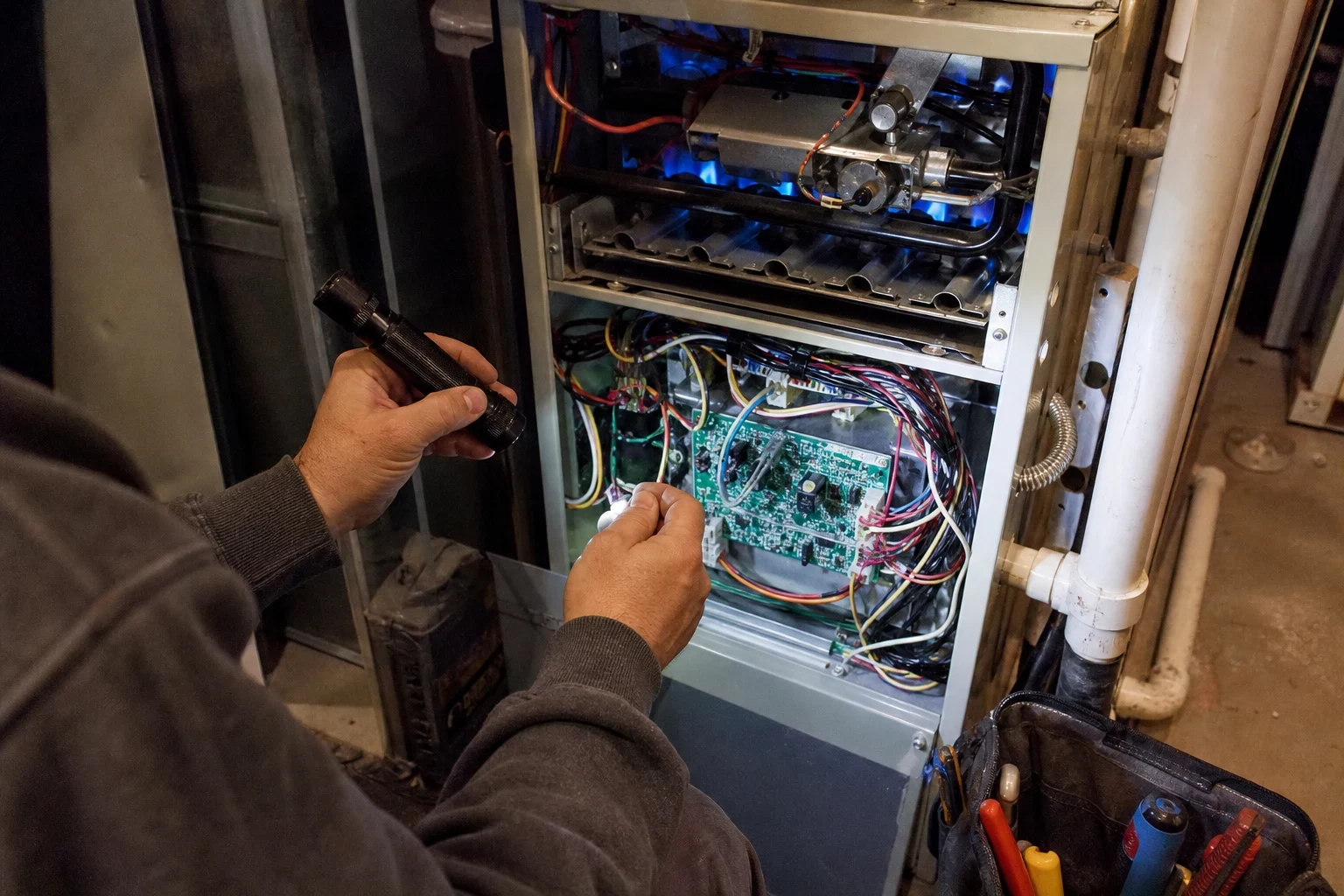
Most furnace problems come down to a handful of parts: a dirty flame sensor, a failed igniter, a tired inducer motor, a clogged filter tripping the high-limit switch, or a control board that has stopped talking to the thermostat. We test before we replace, so you pay for the part that actually failed instead of a guess.
We hold a Gas heating mechanical license and work under WA Contractor Registration #KDHEAHA757JA, which matters when the repair involves gas valves, burners or venting. Before we leave, we check the flame, the draft and the safety controls so you know the furnace is running the way it should.
If the heat goes out on a cold night, pick up the phone anyway. Our emergency HVAC repair runs around the clock, and we never tack on a surcharge for a late-night or weekend visit.
What a furnace repair visit includes
- Floor and entry protection
- Shoe covers go on at the door and a drop cloth goes down from the entry to the furnace. If the unit is in a finished basement or closet, we cover nearby carpet and belongings too.
- Full diagnostic
- We check ignition, flame sensing, gas pressure, the inducer and blower motors, limit switches, filter condition and thermostat signals. You get the cause, not just the symptom.
- Written quote before work
- We write up the repair and its price and hand it to you before any part comes off the furnace. If you approve the work, the diagnostic fee is credited toward the repair.
- Safety checks on gas units
- We look at the heat exchanger, venting and combustion, and test for carbon monoxide around the furnace. If we find something unsafe, we show you and explain your options.
- Cleanup and a quick walkthrough
- Old parts leave with us, the area gets wiped down, and we show you what we fixed and how to keep it running, like how often to change your filter.
Signs your furnace needs a repair
Blowing cold or lukewarm air
The blower runs but the burners never light, or they light and shut off. A flame sensor or igniter is a common cause.
Short cycling
The furnace starts and stops every few minutes. That wears parts fast and often points to an overheating limit switch or a filter that needs changing.
New noises
Banging at startup, squealing or a steady rattle usually means delayed ignition, a worn motor bearing or something loose in the blower.
Rooms that never warm up
When a cold snap pushes temperatures toward single digits, a weak furnace shows it first. Uneven heat can mean a struggling blower or a unit that can't keep up.
Yellow flame or a smell
A healthy gas flame is mostly blue. A lazy yellow flame, soot or a burning smell that lingers past the first run of the season deserves a look soon.
Rising gas bills
If your usage climbs without a change in habits, the furnace may be running longer to make the same heat.
What affects the cost of a furnace repair
Repair cost depends mostly on which part failed and how easy it is to reach. We price the job in writing after the diagnosis, so you know the number before any work starts. Your diagnostic fee is credited toward the repair.
The part that failed
Cleaning a flame sensor or swapping an igniter is quick work with an inexpensive part. Replacing an inducer motor, gas valve or control board means a bigger part and more labor.
How old the furnace is
Common models use parts we can usually get without trouble. An older or discontinued furnace may need a special-order part, which can raise the cost and add a short wait for delivery.
Access to the unit
Room to stand and work around the cabinet keeps labor down. Squeezing into a tight crawlspace, attic or closet takes longer, and that time shows up in the price.
More than one problem
Sometimes one failure causes another, like a clogged filter that has burned out a limit switch. We'll show you each issue and price it separately.
How the repair day goes
- 1
Your call
Tell us what the furnace is doing and when it started. We'll set a time that works for your household and let you know who is coming.
- 2
Arrival and setup
We introduce ourselves, put on shoe covers and lay drop cloths before opening the furnace. If kids or pets are home, we'll ask where you'd like us to keep the work area.
- 3
Diagnosis and quote
We test the system, show you what we found, and write up the repair with the price. Nothing gets replaced until you say yes.
- 4
Repair and test run
Most repairs are finished in one visit with parts we carry. We run the furnace through several full cycles and confirm safe combustion before calling it done.
- 5
Clean up and explain
We pick up, take the old parts away and walk you through the fix so nobody in the house is left wondering what happened.
Furnace repair questions
Should I repair my furnace or replace it?
When the furnace is sound and the fix is modest, we'll tell you to repair it and keep it running. When a unit is older, keeps breaking down or has a cracked heat exchanger, replacement can make more sense. If you go that route, estimates are free on installations and replacements, and our furnace installation work comes with up to 3 years labor on new installations.
Will you charge extra if my furnace breaks at night or on a weekend?
No. Emergency HVAC repair is available 24/7, and a call at midnight or on a Sunday costs no more than one on a Tuesday morning. You still get a written price before any work starts.
What should I do if I smell gas near the furnace?
Leave the house, don't flip switches, and call your gas utility or 911 from outside. Once the utility says it's safe, call us and we'll find and repair the source at the furnace.
Is there anything I can check before calling?
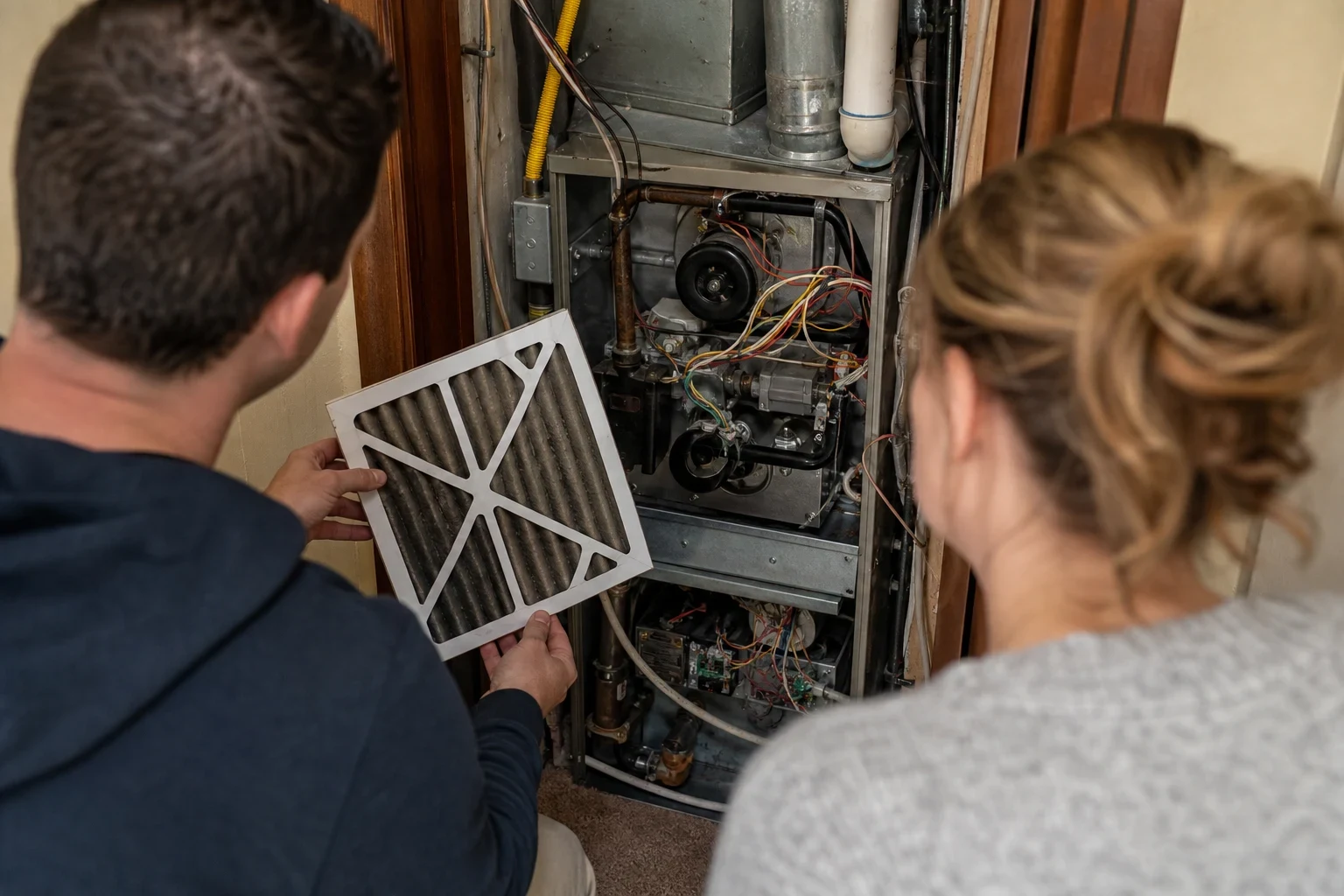
A few things, yes. Confirm the thermostat is in heat mode and its screen isn't blank from dead batteries, check that the power switch on or near the furnace is on, and look for a tripped breaker in your panel. Then pull the filter and see if it's packed with dust. If all of that looks right and the house is still cold, we'll come take a look.
How do I keep this from happening again?
Change your filter regularly and have the furnace tuned up each fall before heavy use. Our maintenance plans include yearly tune-ups, repair discounts and priority scheduling, which catches worn parts before they leave you without heat.
Ready for a warm house again
Tell us what your furnace is doing and we'll come out, protect your floors and give you a clear answer with a written quote. We work in Millwood, Spokane Valley, Liberty Lake and nearby.